




AI and Recruitment
AI and Recruitment In an era defined by rapid technological advancement, the recruitment industry stands on the cusp of a profound transformation. The age-old process of hiring, once reliant on manual screenings and intuition (or the hiring manager's 'gut feeling,' which we all know can sometimes be less reliable than a fortune cookie), is now undergoing a seismic shift, driven by the remarkable capabilities of Artificial Intelligence (AI). As businesses worldwide recognise the need for efficiency, diversity, and precision in their talent acquisition endeavours, AI is emerging as the game-changing catalyst, reshaping the very landscape of recruitment. So grab your robot mascot because we're about to explore the fascinating dynamics of the recruitment industry in the age of AI. Improved Candidate Matching and Sourcing (aka Tinder for Jobs): Remember the days when finding the perfect candidate was like searching for a needle in a haystack? Well, enter AI-powered applicant tracking systems, where algorithms play matchmaker. With these systems around, gone are the days of "close enough" hires - now it's all about finding that special someone (professionally speaking). Video Interview Analysis (Lights, Camera, Analysis!). Who knew that AI would become the ultimate film critic? In 2023, we witnessed the rise of video interview analysis tools that critique candidates' expressions, tone of voice, and poker faces. It's like AI is sitting next to you during the interview, whispering, "I think they might be bluffing about their Excel skills." Diversity and Inclusion Enhancement (AI: The Unbiased Buddy): AI isn't here to judge – unless it's about biased job descriptions and evaluations. This year, AI jumped on the diversity and inclusion bandwagon, making sure that job postings sound less like an exclusive club and more like a welcoming brunch spot. Cheers to AI for being the ultimate inclusion influencer! Chatbot-Assisted Communication (Texting Your Way to a New Job): Remember the days when you had to call a company to schedule an interview? Yeah, neither do we. Thanks to AI-powered chatbots, now you can text your way into a job interview. It's like having a virtual assistant who never gets tired of your questions. ("Yes, Karen, we'll confirm your interview time for the hundredth time.") Peering into 2024: The Robot Takeover Continues… Enhanced Predictive Analytics (AI: The Crystal Ball Whisperer): Move over, Nostradamus – AI is the new fortune teller! In 2024, we're expecting AI to predict job market trends with the accuracy of a squirrel predicting the weather. Who needs a career counsellor when you have algorithms predicting your next job hop? Virtual Reality (VR) Assessments (Welcome to the Matrix, Job Edition): Get ready to strap on those VR headsets, because job interviews are about to get a lot more surreal. In 2024, candidates might find themselves virtually climbing corporate ladders or negotiating deals in a digital boardroom. Just remember to take off the VR headset before trying to shake your interviewer's hand. Continuous Candidate Engagement (AI: The Persistent Pal): AI won't just be your recruitment buddy during job searches. It'll follow you around like a helpful shadow, offering career advice at the supermarket, recommending online courses while you binge-watch, and suggesting networking events while you're trying to enjoy a quiet evening in. Thanks, AI, but we promise we'll attend that webinar later! AI Ethics and Regulation (When Robots Learn Manners): As AI's role in recruitment grows, so do the ethical concerns. In 2024, we might witness AI attending etiquette classes to learn not to ask candidates, "Why did you leave your last job, and don't worry, I won't tell your future boss?" Kudos to the industry for ensuring that AI doesn't turn into your overly curious aunt. As we approach the end of 2023 in this ever-entertaining recruitment realm, it's clear that AI isn't just streamlining processes; it's bringing a whole new level of innovation. From AI becoming your personal recruitment wingman to predicting your job-hopping tendencies, the future holds promise that most of us couldn’t dream up. Just remember, when you're being interviewed by a VR headset-wearing recruiter bot, it's not an audition for a sci-fi sitcom – it's just the quirky reality of the AI-powered recruitment landscape!
2025 Annual Market Insights Guide
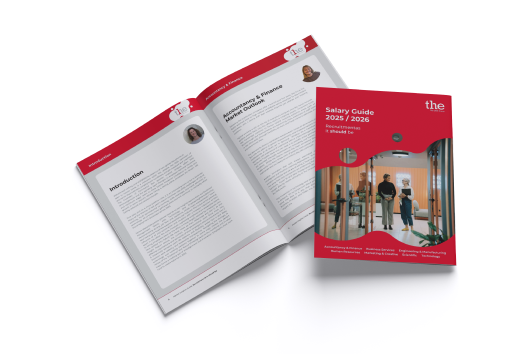
The ONE Group’s 2025/26 Market Insights Guide, including Salaries, Benefits & Trends, is a comprehensive guide to recruitment across Cambridgeshire, Essex, Hertfordshire, Northamptonshire and beyond . It provides unique insights into today’s employment market for roles across: Accountancy & Finance, Business Services, Engineering & Manufacturing, Executive, Human Resources, Marketing & Creative, Sales, Scientific and Technology. The recruitment landscape has changed so much. Whilst it has, without doubt, been challenging, it has also been an incredible time for learning, developing and adapting to new ways of working, engaging, hiring and retaining talent. The information in this guide is taken from a market survey conducted through some of the 150,000 candidates registered on our database. We have also included our own insights and observations through working in this incredible, vibrant sector. Each guide includes salary ranges for more than 250 different roles in the Permanent, Temporary and Contract recruitment markets. You can use this guide to help you develop accurate budgets, establish salary benchmarks and ensure you are offering the most competitive remuneration packages. Our guides also include commentary from our recruitment experts who highlight key trends you need to know about on a local, national and sub-sector level. The salaries listed for each position in this 2025 Salary Guide are starting pay only; bonuses and other forms of remuneration have not been taken into account. To download your copy of our 2025 Annual Market Insights Guide which includes: Salary, Benefits and Trends, please complete the form.

Benchmarking Service
Benchmarking Service What is our Benchmarking Service? Introducing our complimentary Full Benchmarking Service, designed to provide you with insights into current market salary, benefits and flexibility trends. For over 20 years we’ve advised businesses of all shapes, sizes and industries on salaries and benefits for their teams. Our six-step process is designed to provide you with a seamless and comprehensive approach to understanding and optimising your hiring compensation strategy. By combining a personalised consultation with detailed research and actionable insights, we ensure that your organisation remains competitive in attracting and retaining top talent while aligning your compensation packages with current market trends and business objectives. This service is provided at no cost and is part of our commitment to supporting your organisation’s success. Our team is committed to helping you attract and retain top talent by ensuring your compensation packages are competitive and aligned with current market standards. Benefits of Benchmarking: Attract Top Talent: Competitive packages are key in attracting qualified candidates. Retain Employees: Fair and competitive salaries boost employee morale and job satisfaction, which could lead to improved performance and employee retention. Ensure Pay Equity: Benchmarking supports fair pay policies. Compensation Strategy: Accurate data helps with pay strategies and adhering to hiring budgets. By using our Full Benchmarking Service, you can ensure your organisation remains competitive in the market, helps support employee satisfaction, and meets industry expectations. Our Six-Step Process 1. Submit Your RequestTo get started, please fill out the form below with the details of the roles you wish to benchmark. 2. Initial ConsultationOur team will contact you to gather detailed information about your specific needs and objectives. 3. ResearchWe will conduct research tailored to your requirements, including salary ranges, regional variances, benefits and flexibility options. 4. AnalysisWe compile the research findings into a detailed report, ensuring all aspects of your specified criteria are addressed. 5. ConsultationWe’ll reach out to arrange a meeting where we present our findings and provide expert advice based on the data collected. 6. ResultsAfter our meeting, you’ll receive the complete benchmarking report, equipping you with the insights needed to make informed decisions.

Guide to Competency Based Interviews
Competency-based interviews are used by more employers every year and still catch candidates out. Covers the competencies you’re likely to be assessed on, a bank of practice questions, and the structured technique the strongest candidates use to frame their answers.

Guide to Interviews
01 Start with the job description Read it once, then read it again with a pen in your hand. Most job descriptions contain four or five things that matter and a fair amount of padding around them. Work out which is which, then prepare an example for each of the things that do.And if we sent you the role, ask us what the hiring manager is actually concerned about. We usually know, and it's often not the first thing on the advert.02 Research the business, not just the website Their website tells you what they say about themselves. Their recent news, their LinkedIn page and their competitors tell you what's happening. Look for anything that changed in the last year: funding, a new site, a leadership change, a product launch.Referring to one of those in the interview does far more for you than reciting their values back at them.03 Know your own CV You'd be surprised how often this catches people out. An interviewer picks a line from three jobs ago and asks about it, and “that was a while back” is a weak answer. Go through your own CV beforehand and make sure you can talk about everything on it, including the gaps and the short stints.04 What to wear The old advice was a suit, always. That stopped being true some time ago. Turning up in a suit at a business where nobody owns a tie can feel as awkward as the reverse.Ask us. We've been to most of these offices and we'll tell you what people there wear.05 Getting there, or logging on For an interview in person, plan the journey and add half an hour. Do the trip once beforehand if you can.For one on Teams or Zoom, test the link the day before, check your camera and microphone, and find somewhere with a plain background and decent light. Have a phone number for the interviewer in case the technology lets you down, because occasionally it does.06 The first few minutes People decide how they feel about you early, and then spend the rest of the hour looking for evidence. Arrive ten minutes before, not thirty. Be pleasant to whoever meets you at reception, because they're often asked afterwards. Have something to open with that isn't the weather.07 Answering the questions Interviewers are looking for evidence more than opinions. “I'm very organised” tells them nothing at all. A short account of a time your organisation rescued a project tells them plenty.Keep answers to around two minutes. If you've finished and they're still writing, stop talking. Silence usually means the interviewer is still thinking, and filling it is how good answers get buried.Many employers use competency-based questions, which have a structure of their own. Our separate guide covers how to prepare for those. Read the competency-based interviews guide 08 What to ask them You'll be invited to ask questions, and “no, I think you've covered everything” wastes the opportunity. Have four or five ready and expect two of them to get answered before you get there.What does success in this role look like after six months?Why is the role open?What's the biggest challenge facing the team at the moment?How would you describe the way the team is managed?What's the next step in the process, and when will I hear?Leave holiday, hours and money out of a first interview. They matter, and we'll handle them on your behalf.09 Afterwards Call us while it's still fresh. Tell us what went well, what didn't, and any doubts you've come away with. We can often get answers to the things you didn't want to ask in the room, and feedback is far more useful to a client the same day than a week later. Got an interview coming up? Speak to the consultant who sent you the role, or call us on 01733 234000 and we'll point you at the right person. Browse our jobs Send us your CV

Your Guide to the Perfect LinkedIn Profile
01 The photo and the headline Use a photo where you look like yourself on a reasonable working day. A phone camera, decent light and a plain background will do. Profiles with a photo get looked at considerably more often than profiles without one.Your headline defaults to your current job title, which wastes the most visible line on the page.“Financial Controller” is accurate. “Financial Controller | Manufacturing | ACCA | Cambridgeshire” tells a recruiter who is searching for that exact person that they've found them.02 The About section First person, and under about 150 words. Cover what you do, the kinds of business you've done it in, and what interests you next.LinkedIn shows only the first two or three lines before a “see more” link, so put something in those lines that earns the click.03 Experience You can be a little less formal here than on a CV, but the same principle holds. Say what you achieved, not only what you were responsible for. If your CV has strong achievement lines, several of them belong here too.Include every role you want to be found for. Recruiters search by job title, and a role you've left off is a search you won't appear in.04 Skills List the skills you'd want to be approached about, and put the three most important at the top, because those are the ones shown first. Endorsements from people you've worked with carry a little weight. Endorsements from strangers carry none.05 Staying visible You don't have to post to get the benefit of being active. Commenting on things in your sector, following the businesses you'd like to work for and connecting with people you meet will all keep you in view. A profile with no activity at all reads as dormant, and dormant profiles get skipped.06 Looking without announcing it LinkedIn lets you tell recruiters you're open in two ways. The green frame is public and everybody sees it, including your current employer. The recruiter-only setting is hidden from anyone whose LinkedIn account is registered to the company you work for.Use the second one if you're looking discreetly. Treat it as discretion rather than a guarantee, since it depends on whether your employer has their account set up correctly.07 Keep it current Update your profile when something changes, not when you start looking. A profile that suddenly gets polished is visible to everyone who knows you, and colleagues draw the obvious conclusion. Want a recruiter’s view of your profile? If you'd like a second opinion on how your profile reads to a recruiter in your sector, ask us. Our consultants look at these all day, and it takes ten minutes. Speak to a consultant Browse our jobs

How to write a CV that gets read
01 Put it in the order people expect Name and contact details at the top. A short personal statement. Career history in reverse order, most recent first. Education after that, unless you graduated in the last two years. Anything else, such as certifications, systems or languages, at the end and kept brief.That order exists because it matches the way people read a CV. Departing from it to look different rarely pays off.02 Write a personal statement, not an essay Three or four lines. Who you are professionally, what you're good at, and what you're looking for next.Avoid adjectives you can't back up. “A highly motivated, results-driven team player” says nothing, because nobody has ever described themselves as a fairly unmotivated individual who works best alone.03 Achievements, not duties This is where most CVs lose ground. A list of responsibilities describes the job. It says little about how well you did it.Responsible for managing the purchase ledger.Better: Cleared a six-month invoice backlog in ten weeks and cut supplier queries by a third.Same job. The second one was written by someone who did it well. Put a number on it wherever you can: money saved, time cut, volume handled, people managed.04 Tailor it, without rewriting it You don't need a fresh CV for every application. You do need the things a job description asks for to be visible in the top half of the first page. If a role leans heavily on systems experience and yours is buried in a bullet point on page two, move it up.05 How long it should be Two pages suits most people. Three is defensible if you have twenty years behind you and all of it is relevant. One page is fine early in a career and reads as confident.If you're running past three pages, the culprit is usually the jobs from fifteen years ago. Those can become a line each.06 Keep the formatting plain Readable beats designed. A lot of employers run CVs through software before a person sees them, and columns, text boxes, headers, footers and graphics can come out scrambled at the other end.Use a standard font, clear headings and normal margins. Send it as a Word document unless you've been asked for a PDF. Photos aren't expected in the UK and don't work in your favour.07 The things that cost people interviews Typos, particularly in the first three lines.Dates that don't add up, or gaps with no explanation.An email address you set up as a teen.Listing every task in a job instead of the ones that mattered.A different font or format for each role, which usually means it was assembled in a hurry. Want a second opinion on your CV? Send us your CV and we'll tell you what a hiring manager in your sector will make of it. No obligation, and no pressure to start looking before you're ready. Send us your CV Download our CV template